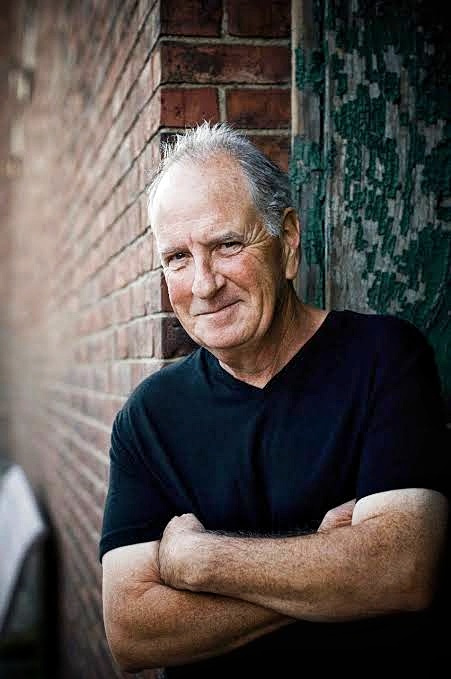
Cormac McCarthy was an American novelist, playwright, and screenwriter whose work is known for its stark violence, sparse punctuation, and deep engagement with themes of fate, morality, and the American landscape. He wrote twelve novels that moved from Southern Gothic settings in Tennessee to the borderlands of the Southwest and, later, to post-apocalyptic and philosophical territory. Books such as Blood Meridian, the Border Trilogy, No Country for Old Men, and The Road brought him both critical reverence and, eventually, wide popular readership.
McCarthy spent much of his career outside the literary spotlight, living frugally and granting few interviews. Recognition grew substantially in the 1990s and 2000s. He died in 2023 at the age of 89, leaving behind a body of work that continues to be studied and adapted.
Full name: Cormac McCarthy
Place of birth: Providence, Rhode Island, United States
Nationality: American
Cormac McCarthy Early Life
Charles Joseph McCarthy Jr. was born on July 20, 1933, in Providence, Rhode Island. He was the third of six children and the eldest son of Charles Joseph McCarthy and Gladys Christina McGrail McCarthy. His father was a lawyer who had graduated from Yale Law School. In 1937 the family moved to Knoxville, Tennessee, when the elder McCarthy joined the legal staff of the Tennessee Valley Authority. They eventually settled in a house in South Knoxville.
McCarthy was raised in a Roman Catholic household and attended Catholic High School in Knoxville. He later said he felt early on that he would not follow a conventional, respectable path expected by his family. After high school he enrolled at the University of Tennessee in 1951–52, initially studying subjects that included physics and engineering before shifting toward liberal arts. He left the university and enlisted in the U.S. Air Force in 1953. He served until 1957, spending part of that time stationed in Alaska, where he read widely and hosted a radio program.
He returned to the University of Tennessee from 1957 to 1959. Under the name C. J. McCarthy Jr. he published two short stories, “A Drowning Incident” and “Wake for Susan,” in the campus literary magazine The Phoenix. He received the university’s Ingram-Merrill Award for creative writing. He left again without taking a degree and moved to Chicago, where he worked in an auto-parts warehouse while writing.
Cormac McCarthy Career
Early Novels and Southern Settings
McCarthy’s first novel, The Orchard Keeper, was published by Random House in 1965 after he had worked with editors including Albert Erskine, who had also edited William Faulkner. The book is set in rural Tennessee and established many of the stylistic traits that would mark his work: dense description, limited punctuation, and characters living on the margins of society. He received a traveling fellowship from the American Academy of Arts and Letters and later a Rockefeller Foundation grant, which allowed him to spend time in Europe, including the island of Ibiza.
His second novel, Outer Dark (1968), continued in a stark, almost mythic Southern mode. Child of God (1973) followed, centering on a violent and isolated character in the Tennessee hills. Suttree (1979), a long, semi-autobiographical novel set among the riverfront underclass of Knoxville, is often regarded as one of his most richly textured early works. During these years McCarthy lived modestly, sometimes in near-poverty, and remained largely outside mainstream literary celebrity.
Western Turn and Blood Meridian
In 1981 McCarthy received a MacArthur Fellowship, commonly called a “genius grant.” The award supported the research and writing of Blood Meridian, or the Evening Redness in the West (1985). The novel, set in the mid-nineteenth-century borderlands and built around a violent scalp-hunting campaign, is frequently cited as his masterpiece. Its unflinching depiction of brutality, biblical cadence, and philosophical weight marked a decisive turn from the Appalachian South to the American West and Mexico.
The Border Trilogy and Wider Recognition
McCarthy’s next major project was the Border Trilogy. All the Pretty Horses (1992) became his first major commercial success and won the National Book Award and the National Book Critics Circle Award. It follows a young Texan who rides into Mexico in search of a vanishing way of life. The Crossing (1994) and Cities of the Plain (1998) completed the trilogy, deepening themes of loss, border crossing, and the collision between older codes of honor and modern forces.
Later Novels and Screen Work
No Country for Old Men (2005) returned to the border country with a crime narrative involving a drug deal gone wrong, a relentless killer, and a sheriff contemplating the nature of evil. The novel was adapted into an Academy Award–winning film by Joel and Ethan Coen. The Road (2006), a post-apocalyptic story of a father and son traveling through a devastated landscape, won the Pulitzer Prize for Fiction and was selected for Oprah Winfrey’s book club, bringing McCarthy his largest popular audience. A film adaptation followed.
McCarthy also wrote plays and screenplays. His play The Stonemason and the later The Sunset Limited explored philosophical and theological questions in dialogue form. He wrote screenplays that sometimes overlapped with his novelistic material. In his final years he published two related novels, The Passenger and Stella Maris (both 2022), which addressed science, mathematics, grief, and consciousness through the story of a brother and sister.
Selected major works include:
- The Orchard Keeper (1965)
- Outer Dark (1968)
- Child of God (1973)
- Suttree (1979)
- Blood Meridian (1985)
- All the Pretty Horses (1992)
- The Crossing (1994)
- Cities of the Plain (1998)
- No Country for Old Men (2005)
- The Road (2006)
- The Passenger and Stella Maris (2022)
Cormac McCarthy Awards
McCarthy received the National Book Award and the National Book Critics Circle Award for All the Pretty Horses. The Road won the Pulitzer Prize for Fiction. He was awarded a MacArthur Fellowship in 1981 and earlier Guggenheim and Rockefeller support. He was elected to the American Philosophical Society. Although he was often discussed as a candidate for the Nobel Prize in Literature, he did not receive it. His later public recognition included the widespread success of the film adaptations of No Country for Old Men and The Road.
Cormac McCarthy Personal Life
McCarthy married fellow University of Tennessee student Lee Holleman in 1961. They had a son, Cullen, in 1962. The marriage ended soon afterward. In 1966 he married Anne DeLisle; that marriage lasted until the early 1980s. In 1998 he married Jennifer Winkley; they had a son, John, and later divorced. McCarthy was known for guarding his privacy, granting only a small number of substantial interviews over his long career. He lived for many years in the Southwest, including the Santa Fe, New Mexico, area, and was associated with the Santa Fe Institute, an interdisciplinary research center.
He died on June 13, 2023, in Santa Fe at the age of 89. Tributes from writers, critics, and readers emphasized both the severity of his vision and the singular quality of his prose.
Conclusion
Cormac McCarthy’s writing career stretched across six decades and moved from the hollows of East Tennessee to the deserts and border towns of the Southwest and finally to speculative and philosophical terrain. He developed a distinctive style marked by biblical rhythms, precise observation of landscape and labor, and a willingness to confront extreme violence and moral desolation. Early novels found a small but dedicated readership; later works such as All the Pretty Horses, No Country for Old Men, and The Road reached a much wider public and entered the contemporary canon. He remained personally reticent, preferring the work itself to serve as the primary record. His death in 2023 closed a major chapter in American letters while leaving a body of fiction that continues to be read, debated, and adapted.
FAQs
Who was Cormac McCarthy?
Cormac McCarthy was an American novelist whose major works include Blood Meridian, the Border Trilogy, No Country for Old Men, and The Road. He is regarded as one of the most important American writers of his era.
When and where was Cormac McCarthy born?
He was born Charles Joseph McCarthy Jr. on July 20, 1933, in Providence, Rhode Island. He was raised primarily in Knoxville, Tennessee.
What are Cormac McCarthy’s most famous books?
Widely cited major works include Blood Meridian (1985), All the Pretty Horses (1992), No Country for Old Men (2005), and The Road (2006).
Did Cormac McCarthy win the Pulitzer Prize?
Yes. The Road won the Pulitzer Prize for Fiction.
When did Cormac McCarthy die?
He died on June 13, 2023, in Santa Fe, New Mexico, at the age of 89.
Was Cormac McCarthy a private person?
Yes. He granted very few interviews, lived modestly for much of his life, and generally avoided the public literary circuit.
What is distinctive about McCarthy’s writing style?
His prose is known for sparse punctuation, long rhythmic sentences, vivid descriptions of landscape and violence, and a serious engagement with moral and philosophical questions.
Did any of McCarthy’s books become films?
Yes. Notable adaptations include No Country for Old Men (directed by the Coen brothers) and The Road. All the Pretty Horses and Child of God were also adapted.