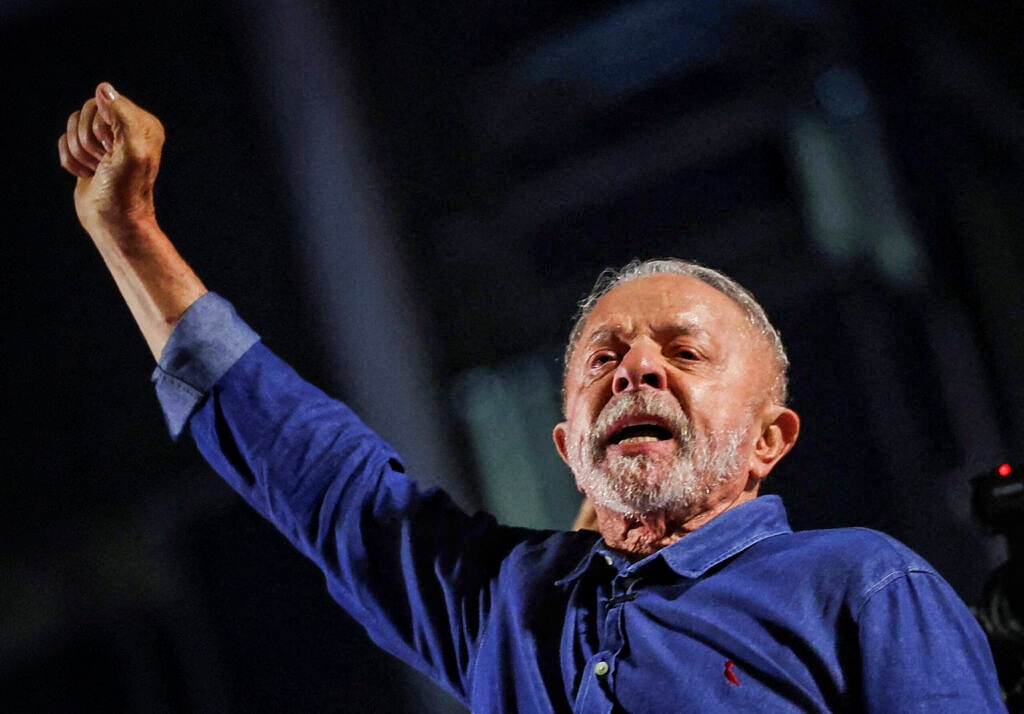
Luiz Inácio Lula da Silva, widely known simply as Lula, is a Brazilian politician, former metalworker and trade union leader who has served as president of Brazil in multiple non-consecutive terms. Rising from extreme poverty in the rural Northeast, he became one of the most influential political figures in modern Brazilian history through his work in the labour movement and the founding of the Workers’ Party.
Lula first held the presidency from 2003 to 2011, overseeing a period of economic growth and social programmes that lifted millions out of poverty. After a period of legal battles and imprisonment, his convictions were later annulled. He returned to office in 2023 and, in October 2026, won a fourth term, becoming the first Brazilian president elected four times since the return to civilian rule.
Full name: Luiz Inácio Lula da Silva (born Luiz Inácio da Silva)
Place of birth: Caetés (then a district of Garanhuns), Pernambuco, Brazil
Nationality: Brazilian
Luiz Inácio Lula da Silva Early Life
Luiz Inácio da Silva was born on 27 October 1945 in the rural locality of Caetés, then part of the municipality of Garanhuns in the state of Pernambuco in Brazil’s Northeast. He was the seventh of eight children of Aristides Inácio da Silva and Eurídice Ferreira de Melo, known as Dona Lindu. His parents were poor agricultural workers who experienced hunger and hardship in one of the country’s most impoverished regions.
When Lula was still a young child, his mother took the children south in search of better conditions. In December 1952 the family made a long journey by truck, known as a pau de arara, lasting around 13 days. They first settled on the outskirts of Guarujá in São Paulo state before later moving to the city of São Paulo itself, where they lived in very modest conditions, including a single room behind a bar in the Ipiranga neighbourhood.
Lula received little formal education. He did not learn to read until around the age of ten. He left school early to help support the family and worked a series of jobs as a child and teenager, including shining shoes, selling on the street, working in a dye shop and serving as an office boy. At 14 he obtained his first formal work permit. He later trained as a lathe operator, or torneiro mecânico, through the National Service for Industrial Learning (SENAI), completing the course and entering the metalworking industry. In a workplace accident he lost the little finger of his left hand.
The family background of rural poverty, migration and early entry into industrial labour shaped his later commitment to workers’ rights and social inclusion.
Luiz Inácio Lula da Silva Career
Trade Union Leadership
Lula began working in the metal industry in the São Paulo region, including at companies such as the Villares metalworks in São Bernardo do Campo, part of the industrial ABC Paulista area. Influenced by his older brother José Ferreira da Silva, known as Frei Chico, he became active in the Metalworkers’ Union of São Bernardo do Campo and Diadema.
He rose through the union ranks and was elected president of the union in 1975. During the military dictatorship that ruled Brazil from 1964 to 1985, he led major strikes in the late 1970s demanding better wages and working conditions. These actions brought him national attention and led to his arrest and a conviction under the National Security Law, though he was later released. The strikes helped strengthen the independent labour movement and increased pressure for political opening.
Founding of the Workers’ Party and Early Political Career
In 1980 Lula was among the founders of the Partido dos Trabalhadores (Workers’ Party, or PT), a left-wing party that sought to represent workers, social movements and progressive sectors. He became one of its most visible leaders. In the 1980s he participated in the Diretas Já campaign demanding direct presidential elections. He ran unsuccessfully for governor of São Paulo in 1982 and later for the presidency in 1989, 1994 and 1998, finishing as runner-up on several occasions.
First Presidency (2003–2011)
Lula won the 2002 presidential election and took office on 1 January 2003. He was re-elected in 2006. His governments implemented social programmes such as Bolsa Família, which provided cash transfers to low-income families, expanded access to education and credit, and oversaw a period of economic growth driven in part by commodity exports. Millions of Brazilians moved out of extreme poverty. His administration maintained relatively orthodox macroeconomic policies while expanding social spending. He left office in 2011 with high popularity and was succeeded by Dilma Rousseff of the same party.
Legal Challenges and Imprisonment
In the mid-2010s Lula became a central figure in the large-scale corruption investigations known as Lava Jato (Car Wash), which examined kickback schemes involving the state oil company Petrobras and major construction firms. He was convicted on charges including corruption and money laundering and began serving a prison sentence in 2018. He spent about 580 days in custody. In 2019 and subsequent rulings, Brazil’s Supreme Court annulled the convictions on procedural grounds, restoring his political rights. Supporters viewed the cases as politically motivated; critics maintained that serious wrongdoing had occurred. The annulments allowed him to run for office again.
Return to the Presidency (2023–present)
Lula won the 2022 presidential election, defeating incumbent Jair Bolsonaro in a closely contested runoff, and took office again on 1 January 2023 at the age of 77. His third term focused on rebuilding social programmes, environmental policy, and Brazil’s international role. In the 2026 election he sought and won a fourth term, defeating Flávio Bolsonaro, son of the former president, in the runoff. This victory made him the first Brazilian leader elected to four presidential terms in the post-dictatorship democratic period. His new term is scheduled to begin in early 2027.
Luiz Inácio Lula da Silva Awards
Lula has received numerous national and international recognitions for his political and social work. These include the World Food Prize for efforts against hunger, the Indira Gandhi Peace Prize, and the Chatham House Prize. He has been awarded many honorary doctorates from universities around the world. During and after his first presidencies he was frequently cited in international rankings of influential leaders. Specific awards and their exact years vary across sources; the most consistently noted relate to anti-poverty and food security initiatives.
Luiz Inácio Lula da Silva Personal Life
Lula has been married three times. His first wife, Maria de Lourdes da Silva, died in 1971 from hepatitis while pregnant; their child also did not survive. In 1974 he married Marisa Letícia Rocco Casa, with whom he had several children; he also adopted her son from a previous relationship. Marisa Letícia died in 2017 after a stroke. In May 2022 he married Rosângela da Silva, known as Janja, a sociologist.
He is the father of five children. Lula was raised Catholic and has continued to identify with that faith. He has often spoken of the influence of his mother, Dona Lindu, and of the hardships of his early years as formative experiences. Despite his long public career, he has maintained a relatively straightforward personal style rooted in his working-class origins.
Conclusion
Luiz Inácio Lula da Silva’s life traces a path from rural poverty and industrial labour to the highest office in Brazil on four separate occasions. His career as a union leader during the military dictatorship, his role in founding the Workers’ Party, and his presidential terms have left a deep mark on Brazilian politics and society. Supporters credit him with expanding social inclusion and asserting Brazil’s presence on the global stage. Critics have pointed to economic challenges, corruption scandals associated with his party, and polarisation. At 81, following his 2026 election victory, he remains a central and polarising figure in Brazilian public life, embodying both the aspirations and the controversies of the country’s recent democratic history.
FAQs
Who is Luiz Inácio Lula da Silva?
He is a Brazilian politician and former metalworker who has served as president of Brazil from 2003 to 2011, from 2023 onward, and was elected to a fourth term in 2026. He is commonly known as Lula.
When and where was Lula born?
He was born on 27 October 1945 in Caetés, then a district of Garanhuns, in the state of Pernambuco, Brazil.
What was Lula’s early career?
He worked as a metalworker and rose to become a leading trade unionist in the São Paulo industrial region, organising major strikes in the late 1970s under the military regime.
How many times has Lula been elected president?
He has been elected president four times: in 2002, 2006, 2022 and 2026.
Was Lula imprisoned?
Yes. He was convicted in connection with the Lava Jato investigations and served time in prison beginning in 2018. Those convictions were later annulled by Brazil’s Supreme Court, restoring his eligibility to run for office.
Who is Lula married to?
He is married to Rosângela da Silva, known as Janja. He was previously married to Maria de Lourdes da Silva and to Marisa Letícia Lula da Silva, both of whom are deceased.